Use Your Banking Services Provided Online!
📅 2026 Update: Changes in Banking Services and Negotiable Instruments
Since this article was first written, there have been no major updates to the laws governing negotiable instruments in the U.S. However, the fees and services related to banking have continued to evolve. The original article provides a foundation, and the following updates will highlight key changes and current practices in banking services.
🏦 Bank Fees for Processing
Banks often charge fees for processing negotiable instruments, such as checks. As of October 2026, these fees can vary widely by institution. For example, a bank might charge $30 for a returned check and $35 for a stop payment order.
It's important for businesses to be aware of these costs as they can impact financial planning.
⏳ Check Clearing Times
The time for checks to clear remains regulated under the Expedited Funds Availability Act. Currently, banks are required to make funds available within one to five business days, depending on the type of check and how it was deposited. This is important for businesses that rely on timely access to funds.
✅ Eligibility for Holder in Due Course
To be recognized as a Holder in Due Course (HDC), a holder must take the instrument for value, in good faith, and without notice of any defects. This status provides certain protections under U.S. business law, which is vital for businesses engaging in transactions involving negotiable instruments.
⚖️ Statutes of Limitations
The statute of limitations for enforcing negotiable instruments has not changed. For notes, it is 6 years, while for drafts (checks), it remains 3 years. Understanding these deadlines is crucial for businesses to ensure they enforce their rights in a timely manner.
📌 Key Points to Remember
- 🏦 Bank fees for processing instruments can vary widely.
- ⏳ Check clearing times are regulated and can take up to five days.
- ✅ Holder in Due Course status offers protections in transactions.
- ⚖️ Statutes of limitations for notes and checks remain unchanged.
💡 Tips for Navigating Banking Services
Before making decisions, it's wise to discuss your specific situation with an attorney.
📝 Understand Bank Fees
Review the fee structures of different banks. Knowing what fees apply to negotiable instruments can help you choose a bank that aligns with your business needs.
📅 Monitor Check Clearing Times
Keep track of when you deposit checks. This will help you manage your cash flow and ensure you do not rely on funds that have not cleared yet.
✅ Know Your Rights as an HDC
Familiarize yourself with the requirements to qualify as a Holder in Due Course. This knowledge can protect you in financial transactions involving negotiable instruments.
⏳ Keep Track of Deadlines
Be aware of the statutes of limitations for enforcing negotiable instruments. Maintaining good records can help you act promptly if a dispute arises.
🔍 Utilize Free Resources
Take advantage of free resources from organizations like the Consumer Financial Protection Bureau for additional guidance on financial products and negotiable instruments.
🏆 Banking Services Ranked by User Reviews (2026)
In the context of banking services, several companies have been rated based on user reviews. These services are relevant to managing negotiable instruments and understanding your rights. The following ratings are based on Trustpilot data checked in October 2026.
Keep in mind that star ratings are just one aspect to consider, as unhappy customers tend to leave more reviews.
🥇 1. MEXEM Europe
MEXEM Europe has been rated 4.8. It is known for its investment brokerage services and access to global financial markets. While many users appreciate the range of services offered, some have reported issues with order execution times, which could affect timely transactions.
🥈 2. Experian
Experian holds a score of 4.1. This company is recognized for its credit report and monitoring services. Reviewers highlight its usefulness in managing credit, but some have noted challenges with customer service responsiveness, which could impact users seeking immediate assistance.
🆓 Free Government and Nonprofit Help
Organizations like the Consumer Financial Protection Bureau (CFPB) provide free resources related to financial products, including negotiable instruments. Legal aid organizations also offer free or low-cost assistance for individuals facing issues with checks and other instruments.
🔎 What to Compare When Choosing Banking Services
- 💰 Fees for processing negotiable instruments.
- ⏳ Check clearing times as per regulations.
- ✅ Eligibility requirements for Holder in Due Course status.
- 📅 Support offered for disputes and queries.
❓ Frequently Asked Questions
❓ What are negotiable instruments?
Negotiable instruments are written promises or orders to pay a specific amount of money. Common examples include checks, promissory notes, and drafts.
💳 How do I issue a negotiable instrument?
To issue a negotiable instrument like a check, you must provide a signed document stating the payment amount. Essential elements include the date, amount, and signatures.
🚫 What happens if a check bounces?
If a check bounces, the bank may charge fees for returned items. This can affect your business's reputation and cash flow.
🔒 How can I prevent check fraud?
To prevent check fraud, businesses should implement security measures like positive pay services. These services match presented checks against a list of issued checks.
📜 What is the role of the Consumer Financial Protection Bureau?
The CFPB offers resources and guidance related to financial products, including negotiable instruments. They assist consumers in understanding their rights and resolving disputes.
⏳ How long do I have to enforce a negotiable instrument?
The statute of limitations for enforcing a negotiable instrument varies. It is 6 years for notes and 3 years for drafts (checks).
⚖️ Recent Cases Related to Negotiable Instruments
Recent court rulings have clarified various aspects of negotiable instruments and their enforcement. These rulings influence how businesses handle checks and other financial documents.
- Court dismisses claims in VESEQU LLC contract disputeArmed Services Board of Contract Appeals · May 21, 2026
- Court orders decision on contractor's claim against governmentArmed Services Board of Contract Appeals · May 20, 2026
- Court rules on contract dispute between Inland Service Corp. and ArmyArmed Services Board of Contract Appeals · May 21, 2026
- Court dismisses Phoenix Management appeal after settlementArmed Services Board of Contract Appeals · May 20, 2026
Browse more rulings on the news page for additional recent decisions.
End of October 2026 Update
Online banking services allow customers of banks to
perform any number of useful banking actions online instead of needing to
physically visit a bank to do so. Many banks offer free online banking for
their customers as an additional enticement to open accounts with that bank.
The ease and accessibility of online banking services is one of the positive
results of banking and the Internet coming to intersect with one another, and
it is conceivable that in the future most, if not all, banking will be conducted
through online banking services.
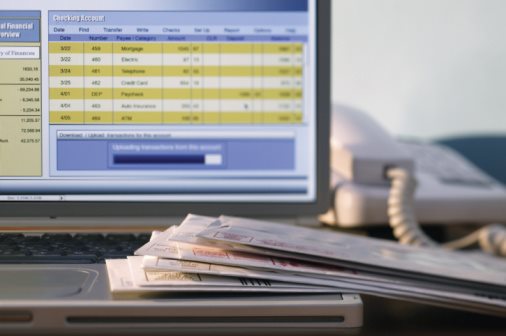
Online banking services include a number of different
functions. Perhaps the most common are transactional services, oriented around
making some kind of payment online. One of these free online banking services
related to transactions is bill payment online, by which one can pay directly
from a bank account for a utility bill, for example, all through online
banking. This would be referred to as the bank-aggregator form of electronic
bill presentment and payment, under which the bank would be collecting the
bills which the customer pays, and the customer can simply pay them all through
his or her online banking services.
Transactional online banking services also include funds
transfers, which a customer can use to make transfers between a checking
account and a savings account, for example. Doing so through banks' free online
banking services is often easy and effective, as it requires a minimum of
paperwork and also allows customers to check bank accounts online
frequently in order to determine if the transfer went through.
Purchasing investments is another main transactional type
of online banking service.
Customers may even obtain loans, or pay off loans, through
free online banking services.
There are many non-transactional free online banking
services as well. The most obvious and common of these is likely that of
obtaining bank statements, allowing a customer to monitor his or her accounts
instantly through online banking services. Instead of having to rely upon
monthly paper mail statements, a customer would be able to get a statement at
any point simply by visiting his or her account through his or her bank's
website.
Additionally, banks may offer up online banking services
like a checking registry, allowing a customer to see all the checks he or she
has issued and whether or not they have been paid yet. The bank may even offer
a chat function in order to assist customers in any way they might need by
putting them in touch with a bank representative.
Online banking services offer up a number of other
options which are unavailable through more traditional means of banking. For
example, online banking services might include the ability to easily transfer
the data offered up through an online banking statement into another program,
such as an accounting program or a tax program. Also, some banks even offer support for all of a user's accounts so that a customer can consolidate
information on all his or her accounts through one bank's online banking services.