Using A Certified Check
📅 2026 Update: Changes Impacting Certified Checks
Since the original article on certified checks was written, there have been important updates in U.S. business law that could affect small businesses. These changes include new rules on corporate transparency, noncompete agreements, and tax laws that might influence financial decisions. The original article continues further down this page.
🏢 📜 Corporate Transparency Act Changes
In March 2025, the Financial Crimes Enforcement Network (FinCEN) updated its rules. It exempted U.S.-formed companies from reporting their beneficial ownership under the Corporate Transparency Act (CTA). This change became permanent in August 2026.
Knowing these rules can impact how businesses manage their finances, including the use of certified checks.
🗣️ 🚫 FTC Noncompete Rule Removal
In February 2026, the Federal Trade Commission (FTC) removed its 2024 rule that banned most noncompete agreements. This aligns with court rulings that blocked the rule nationwide. For businesses, this means more flexible hiring practices, which can impact employment contracts and the use of certified checks for payments.
💰 💼 Tax Law Changes for Startups
The tax law changes made in 2025 also affect small businesses. The federal exclusion on qualified small business stock increased significantly. For stocks issued after July 4, 2025, the exclusion rose to 50% after three years and 100% after five years.
This can affect how businesses structure finances and make payments, including using certified checks for investments.
🏦 📈 Small Business Lending Updates
The Consumer Financial Protection Bureau (CFPB) finalized a new version of its small business lending data collection rule in May 2026. Now, financial institutions with at least 1,000 covered transactions must understand their obligations. This affects how businesses secure loans and may influence their use of certified checks for securing transactions.
📌 Key Points Summary
- Corporate Transparency Act: Exemptions for beneficial ownership reporting are now permanent.
- FTC Noncompete Rule: Removal of restrictions offers more flexibility in employment contracts.
- Tax Law Changes: Significant increases in exclusions for small business stock, affecting financial decisions.
- Small Business Lending Data: New data collection rules for lenders to better understand small business needs.
💡 Tips for Using Certified Checks
Before making decisions regarding certified checks, it is best to discuss your specific situation with your attorney.
🔍 Understand Certified Checks
Certified checks are guaranteed funds, making them safer than personal checks. They can be useful for large transactions, like purchases or deposits, where trust is essential.
🏦 Evaluate Your Banking Options
Different banks may have varying policies and fees for issuing certified checks. It is wise to compare these factors to ensure you choose a bank that aligns with your financial needs.
📑 Keep Records
When using certified checks, always keep a copy or receipt. This is important for tracking expenses and can be helpful in case of disputes.
💰 Be Aware of Fees
Banks often charge fees for issuing certified checks. Understanding these costs can help you budget better and avoid unexpected expenses.
🔒 Secure Transactions
Using certified checks can add an extra layer of security in transactions. Make sure to verify the recipient’s identity to reduce the risk of fraud.
🏆 Services for Small Business Needs Ranked by User Reviews (2026)
Services that assist small businesses, including order fulfillment and payment processing, are vital for effective operations. The following services are ranked based on Trustpilot data as of October 2026. Ratings can change, and it's essential to consider user experiences as part of your decision-making process.
🥇 1. ShipBob
ShipBob has been rated 4.0. It is known for efficient order fulfillment and a user-friendly platform. Reviewers note that while it excels in speed and ease of use, there are occasional delays in shipping and customer support issues that might affect operations.
🥈 2. Square
Square holds a Trustpilot score of 3.6. This service is recognized for its easy-to-use payment processing and integrated point-of-sale system. However, some users mention transaction fees and customer support challenges, which may impact small business finances.
🥉 3. Simply Business US
Simply Business US averages a rating of 4.5. It has been known for its knowledgeable and supportive staff, along with affordable pricing options. Users appreciate the clear and detailed information provided, but some find it difficult to reach customer support over the phone.
4️⃣ ZenBusiness
ZenBusiness holds an impressive Trustpilot score of 5.0. It is recognized for helpful, patient, and knowledgeable staff, along with fast response times. Despite the high ratings, some users experience slow support response times and difficulties canceling ongoing service subscriptions.
🆓 Free Government or Nonprofit Help
The U.S. Department of Labor provides a Small Entity Compliance Guide to help small businesses understand their obligations under the Fair Labor Standards Act. This resource can be beneficial when navigating complex regulations.
🔎 Comparing Services
- 📊 User Ratings: Look for services with high Trustpilot scores.
- 💬 Customer Support: Assess the reliability of customer service.
- 💵 Fees: Compare transaction and service fees.
- 🔄 Flexibility: Choose services that adapt to your business needs.
❓ Frequently Asked Questions
❔ What is a certified check?
A certified check is a type of check guaranteed by a bank. The bank verifies that the funds are available and reserves them for the check's payee.
❓ How do I obtain a certified check?
To obtain a certified check, visit your bank in person. Request the check, provide the necessary funds, and pay any associated fees.
❓ Are certified checks safer than personal checks?
Yes, certified checks are generally considered safer. They are guaranteed by the bank, which reduces the risk of bouncing.
❓ Can I cancel a certified check?
Cancelling a certified check can be challenging. Once issued, the funds are set aside, making it difficult to reverse the transaction without specific conditions.
❓ How long does it take to get a certified check?
Most banks can issue a certified check immediately during business hours. However, processing times may vary depending on the bank's policies.
❓ What should I do if my certified check is lost?
If a certified check is lost, contact your bank immediately. They can guide you through the process of stopping payment and issuing a new check.
⚖️ Recent Court Cases Related to Certified Checks
Recent court rulings have impacted how certified checks are viewed in legal contexts, especially regarding fraud and payment disputes.
- Court denies government's motion in construction contract caseArmed Services Board of Contract Appeals · September 9, 2026
- Delaware Court Rules Against Saama Technologies' FounderCourt of Chancery of Delaware · September 28, 2026
- Court allows early subpoena to identify copyright defendantDistrict Court, W.D. Tennessee · October 7, 2026
- Court Rules on Grand Enterprises' Contract Dispute with U.S.United States Court of Federal Claims · September 25, 2026
You can explore more recent rulings in the news section by visiting more rulings on the news page.
End of October 2026 Update
A certified check is a specialized type of check designed to be safe from any danger of being denied when submitted for payment due to insufficient funds in the account to which the check is attached. Certified checks are used in order to ensure the payee of the validity of payment and to allay any suspicions that the check will bounce. As such, certified checks are most often used for larger or more important payments, such as payments for a car, or security deposits on living spaces.
Certified checks are normal checks which have been stamped by the certifying institution, ensuring that the check will not bounce. Banks will certify checks by first establishing that the account from which the check is drawn actually has the requisite funds within it at the time of the check's issuance.
After performing such a verification, a bank will then certify the check and put a hold on the appropriate amount of funds within the account so that those funds cannot be drawn by any negotiable instrument other than the certified check. This will ensure that when the check is cashed, a sufficient amount of funds will be available in the checking account. Thus, a certified check ensures the payee that he, she, or it will not encounter difficulty from a denied payment.
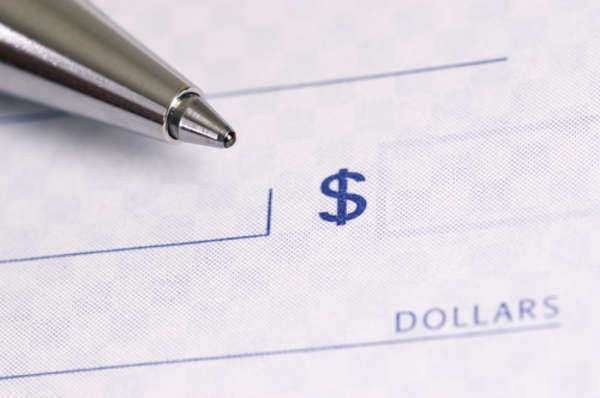
A certified check bears many similarities to a cashier's check, in that both are guaranteed by the issuing bank and both are used for transactions in which the guarantee of the check is significant, either because the payee does not trust the credit of the drawer or because the payment is simply too large to be left without some form of guarantee.
The difference between a cashier's check and a certified check is that a certified check is still drawn from the account of the drawer, whereas a cashier's check is drawn on the bank itself. Because a cashier's check involves paying the bank at the time of purchase, a cashier's check can be obtained purely through cash. A certified check, on the other hand, requires the bank to put a hold on the appropriate sum of money within a given party's account. In other words, a cashier's check will be payable from the bank because the obtaining party will have paid the bank the appropriate amount in a previous transaction, whereas certified checks are payable from an account and are only ensured by the bank. The bank itself will not be making any payments with regard to a certified check.
If a certified check is lost or stolen, the check's drawer should treat it as he or she would if any check had been lost or stolen. The drawer should immediately get in contact with the connected bank and put a stop on the payment for the check. Certified checks are not quite as immediately liquid as traveler's checks or cashier's checks, and as such, are not quite as dangerous because certified checks still require the signature of the payable party, as do normal checks. Nonetheless, sometimes a certified check can be used in the same fashion as cash, and as such, stopping a stolen or lost certified check is critical in preventing any loss of funds.