Checks
📅 2026 Update: Changes in Negotiable Instruments and Business Practices
Since the original article was published, there have not been significant updates to the laws governing negotiable instruments in the U.S. However, some aspects, such as fees and processing times, remain essential for businesses today. The earlier article below continues to provide foundational information on these instruments.
📝 Uniform Commercial Code (UCC) Revisions
The Uniform Commercial Code (UCC) manages negotiable instruments. The last major update was in 2020, focusing on electronic records and signatures. As of October 2023, no major changes have occurred in the UCC from 2024 to 2026.
Businesses should stay aware of potential future updates.
💰 Current Bank Fees
Banks may charge various fees for processing negotiable instruments like checks. These fees can differ by institution. Examples include $30 for a returned item and $35 for a stop payment order.
Understanding these costs can help businesses manage their finances better.
⏳ Check Clearing Times
The time it takes for a check to clear can vary. Under the Expedited Funds Availability Act, banks must make funds from deposited checks available within one to five business days. The specific time depends on the type of check and how it is deposited.
📜 Endorsement and Transfer
To transfer a negotiable instrument, the payee must endorse it. This means signing the back of the instrument. It is crucial for businesses to understand this process to ensure proper handling of payments.
📌 Key Points Summary
- UCC updates have not changed from 2024 to 2026.
- Bank fees for processing instruments can vary widely.
- Check clearing times are regulated, typically taking one to five business days.
- Proper endorsement is necessary for transferring negotiable instruments.
💡 Tips for Managing Negotiable Instruments
Review the details of your situation with your attorney to ensure you understand your rights and responsibilities.
🏦 Understand Bank Fees
Be aware of the fees your bank charges for processing negotiable instruments. These can add up and affect your business's finances if not managed properly.
📅 Know Your Deadlines
Be mindful of the statute of limitations for enforcing negotiable instruments. For checks, this period is three years, while notes have a six-year limit. Missing these deadlines can impact your ability to collect payments.
📲 Utilize Electronic Options
Consider using electronic funds transfers (EFT) for payments. The Electronic Fund Transfer Act (EFTA) provides protections against unauthorized transactions, making it a safer option for businesses.
🛡️ Prevent Check Fraud
Implement measures to prevent check fraud, such as using positive pay services. This service matches checks presented for payment against a list of issued checks to catch discrepancies early.
👥 Seek Free Assistance
If you face issues with negotiable instruments, look for help from organizations like the Consumer Financial Protection Bureau (CFPB) or local legal aid organizations. These resources can offer guidance at no cost.
🏆 Negotiable Instrument Services Ranked by User Reviews (2026)
This section highlights services related to negotiable instruments, focusing on user reviews to gauge quality. These services can assist businesses in managing checks and other financial transactions. The order below reflects Trustpilot data reviewed in October 2026.
Remember that scores can change over time, and unhappy customers often post more reviews.
🥇 1. Experian
Experian has been rated 4.1. It is known for credit report services and credit monitoring, which can help businesses evaluate their financial standing. However, some users have reported issues with customer service responsiveness, indicating a potential area for improvement.
🥈 2. MEXEM Europe
MEXEM Europe holds a rating of 4.8. This company is recognized for its investment brokerage services and access to global financial markets. While it offers valuable services, some users have noted concerns over order execution times, which might affect transaction efficiency.
🆓 Free Government and Nonprofit Help
Organizations like the Consumer Financial Protection Bureau (CFPB) provide free resources and assistance related to negotiable instruments. Legal aid organizations also offer support for disputes over checks and other financial products, making these options accessible for businesses needing help.
🔎 Comparing Services for Negotiable Instruments
- 💳 Check processing fees
- ⏱️ Speed of service and transactions
- 📞 Customer service responsiveness
- 📈 Financial tools and resources offered
- 🔒 Security measures in place
❓ Frequently Asked Questions
❔ What are the main elements required on a negotiable instrument?
A negotiable instrument must include the amount, date, payee, and signatures of the issuer. These elements ensure that the instrument is valid for processing.
📅 How long does it take for a check to clear?
Checks typically clear within one to five business days, depending on the type of check and the method of deposit. Banks must adhere to the Expedited Funds Availability Act for these timelines.
🔄 Can a negotiable instrument be transferred?
Yes, a negotiable instrument can be transferred through endorsement, where the payee signs the back of the instrument. This process allows for the instrument to be passed to another party.
🚫 What happens if a check bounces?
If a check bounces, the bank may charge fees, such as $30 for a returned item. This can lead to additional complications for businesses, including potential disputes over payments.
📄 How long do I have to enforce a negotiable instrument?
The statute of limitations for enforcing a negotiable instrument varies. For checks, it is three years, while for notes, it is six years. Missing these deadlines may result in financial losses.
🏛️ Where can I get help with negotiable instruments?
You can access assistance from the Consumer Financial Protection Bureau (CFPB) or local legal aid organizations. These resources can help you navigate issues related to negotiable instruments without incurring high costs.
⚖️ Recent Court Cases Impacting Negotiable Instruments
Recent court rulings have clarified various aspects of negotiable instruments, impacting how businesses manage checks and other payment methods.
- Court converts Northcon's contract termination to convenienceArmed Services Board of Contract Appeals · April 1, 2026
- Armed Services Board awards $125,000 in contract disputeArmed Services Board of Contract Appeals · April 1, 2026
- Court dismisses attorney fees request in contract disputeArmed Services Board of Contract Appeals · March 30, 2026
- Court denies stay in Oregon v. United States tariff caseUnited States Court of International Trade · May 20, 2026
Readers can browse more rulings on the news page to stay updated on recent decisions affecting negotiable instruments.
End of October 2026 Update
Checks are a certain type of negotiable instrument with certain elements already determined under law. A check is always a draft involving three parties: the drawer, the drawee, and the payee. As a draft, a check is an order by the drawer for the drawee to pay the payee an amount of money equal to the value of the check. The general definition of checks sets a bank as the defined party for the drawee.
Checks serve a common role in everyday transactions, as they are a relatively efficient and simple way to transfer funds. But as different needs have arisen, specialized forms of check have arisen in turn to fill those needs. These specialized checks often bear certain characteristics which further define how they function and which may actually take them away from the standard set of characteristics for checks.
For example, many of these specialized forms of check are designed in such a way that they are effectively as valuable and easy to use as cash, which is not true of checks in general. This is because a standard check requires signatures from both the drawer and the original payable party, the payee, for the check to be cashable. Without either of these signatures, the check would not be usable for payment. But on a cashier's check, for instance, this may not be true, as cashier's checks follow different rules than regular checks.
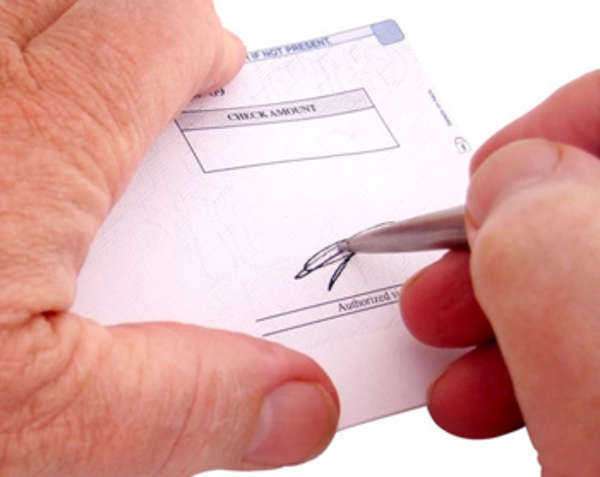
Many of these specialized checks arose out of a need for a guarantee of transferred funds. While a check, as a negotiable instrument, is a contract for payment, the problem of many checks is that the check might be issued, endorsed, and cashed before the full set of transactions could be processed, and it could be discovered that there were not enough funds in the checking account to support the payment on the check.
Sometimes this was used for fraudulent purposes, but often enough today checks will simply bounce if there isn't enough money in the checking account to support payment (though, this has been changing, as overdraft fees have become a more and more desirable practices on the part of banks).
There is no way for a standard check to be verified, such that the recipient has an assurance of payment on the check. As a result, specialized checks were created to provide just such an assurance. Cashier's checks, traveler's checks, and certified checks all fill this role, though each has a slightly different way of doing so. Cashier's checks, for instance, are funded through the bank itself, therefore providing an assurance of payment, while certified checks are still paid through the drawer's account only.
Also, these checks are slightly different from standard checks in terms of how they are treated when they are lost, stolen, or destroyed. Some forms of specialized checks are insured for the holder of that check, such that if it is ever stolen or lost, then the holder would actually be able to obtain a replacement for that check, and thus, lose nothing except perhaps a transaction fee.
There are three main types of checks, as defined by the Uniform Commercial Code. The first is order checks, which are the basic form of checks with which most citizens of the United States are familiar. In an order check, the drawer orders that a certain amount of money be made payable specifically to a single payee, or endorsee.
The second type of check of significance is a bearer check. Bearer checks are not payable to one specific individual, as order checks are. Instead, bearer checks are payable to the bearer of the check itself, regardless of who that individual may be. These checks are, of course, somewhat riskier than order checks, as they can be used illegitimately or in unintended ways if they are physically lost by the holder.
Counter checks make up the third primary type, as checks issued from banks. They are checks in which the drawer and the drawee are both technically the bank, and they can be used to make withdrawals from the bank for those individuals who run out of their own checks.
Checks have, of late, seen less and less use, primarily because new and more efficient forms of payment have come to prominence. Debit cards and checking cards often fulfill much the same purpose as checks without requiring the actual paper documents which are actually costly for banks to produce.
Checks are also often considered much more time consuming than these newer methods of payment. In general, while it is unlikely that the check will be phased out entirely, it is very likely that checks will continue to decline in use as other methods of payment become more useful.